Launch offer — valid today only

📄 Digital book in PDF · read it on your phone or print it

Fire Sprinkler Systems in Drawings: From Tank to Head, and the Hydraulic Calc in 5 Steps One Topic on Every Page

Water supplies, fire pumps, valve sets, sprinkler heads, hazard classes, spacing and obstructions, hydraulic calcs in L/min and kPa, commissioning and maintenance. Each topic has its own page: the drawing first, then what you need to remember. Checked against SANS 10287. 67 illustrated pages.

START STUDYING THIS WAY

🔒 Secure checkout · PDF by email · 30-day guarantee

Every topic, its own pageEach rule, spacing and calc step drawn, with the explanation alongside
67 illustrated pages9 parts, from the water's journey to the exam toolkit
Up-to-date sourcesSANS 10287, the South African sprinkler rules and the OHS Act 85 of 1993
PDF by emailFormat

Look Inside the Book

Every page has one big drawing and a box with the numbers and rules you need to know:

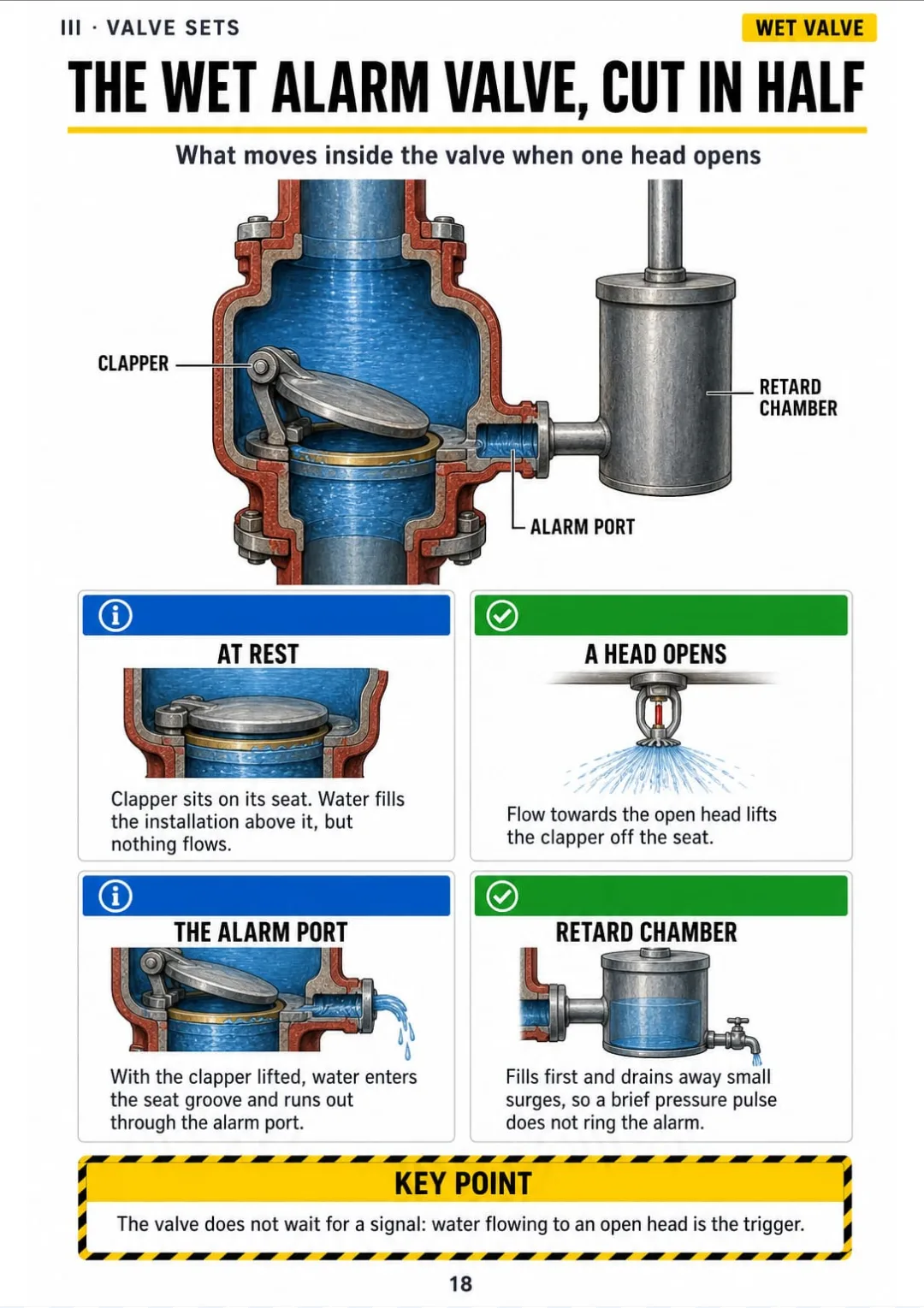
The wet alarm valve in cross-section: clapper, seat, alarm port and retard chamber.
The spare heads cabinet beside the valve set: every type, every rating, one spanner.
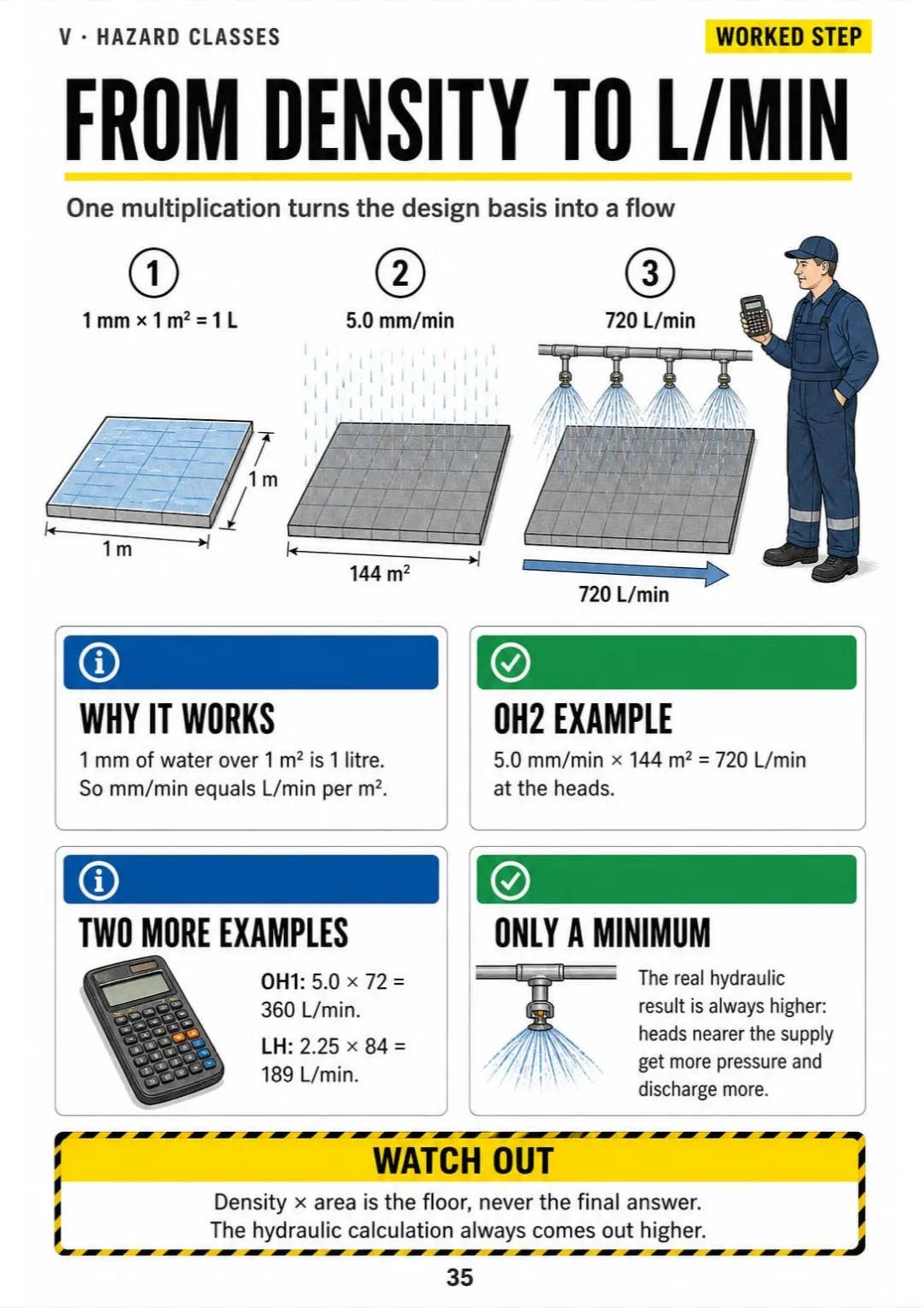
5.0 mm/min × 144 m² = 720 L/min, because 1 mm over 1 m² is 1 litre
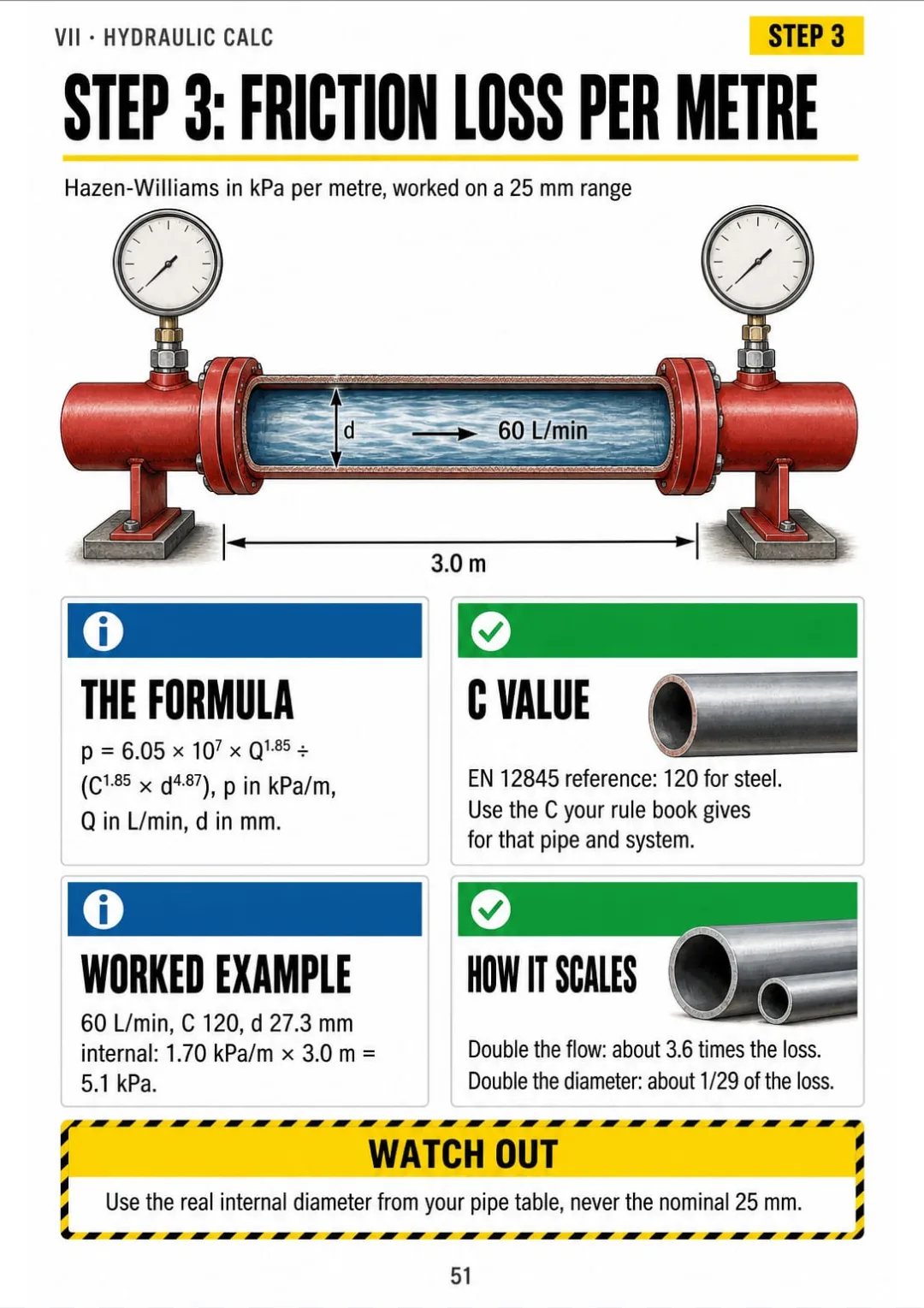
Hazen-Williams, C 120: 60 L/min in 25 mm pipe loses 1.70 kPa per metre.
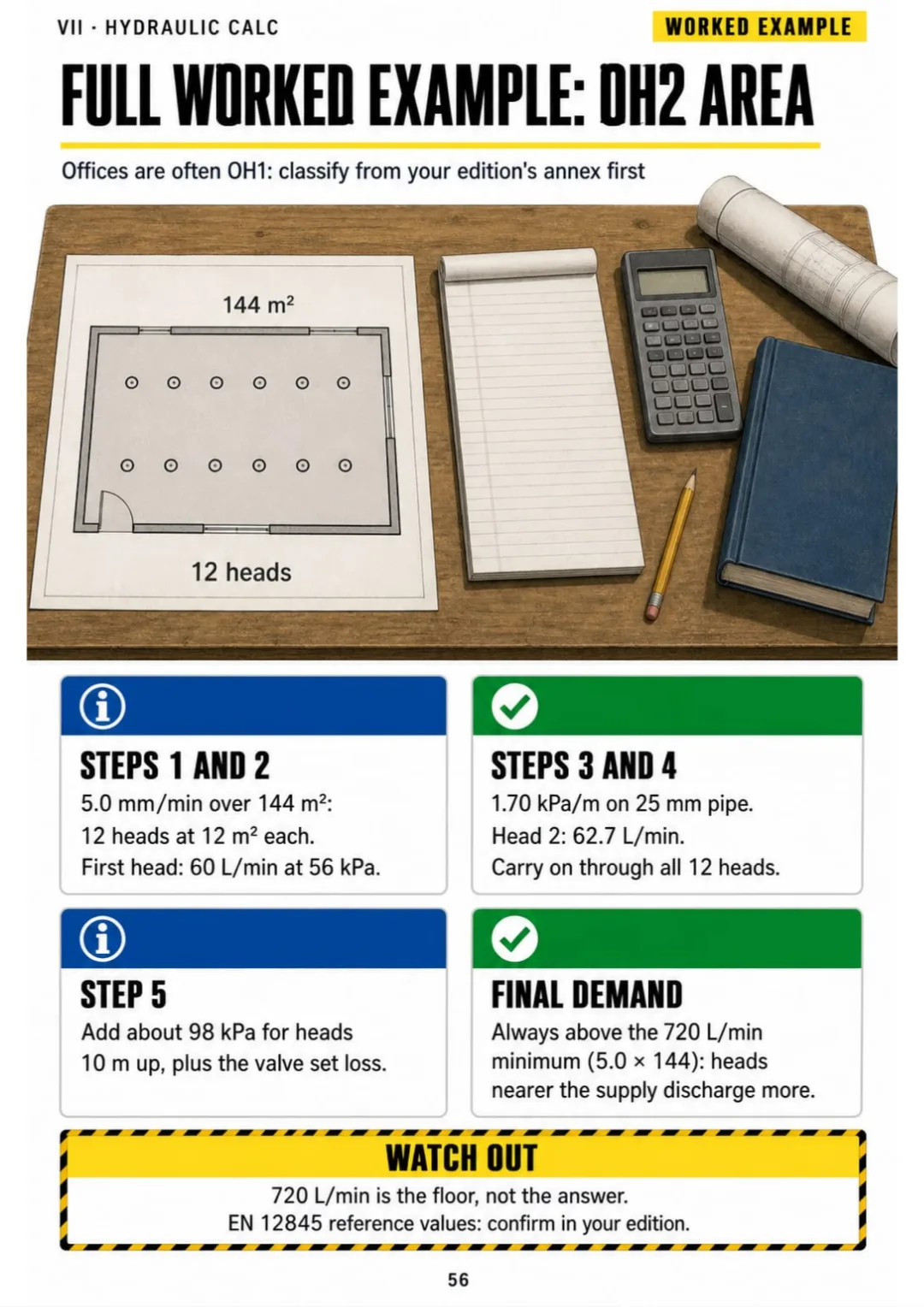
OH2, 5.0 mm/min over 144 m²: minimum 720 L/min, real demand always higher.
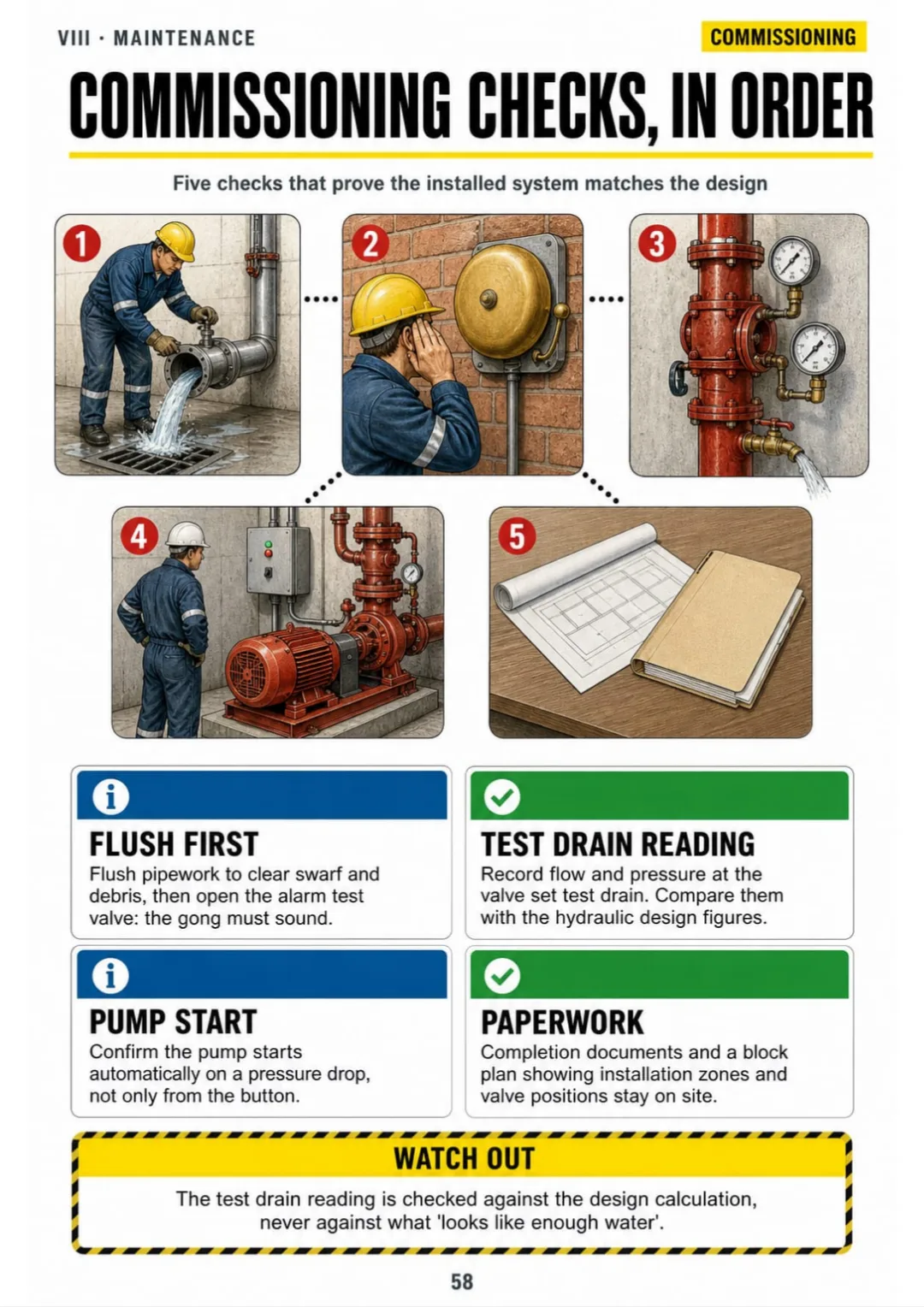
Commissioning in 5 steps: flush, alarm, test drain vs design, pump start, documents and block plan
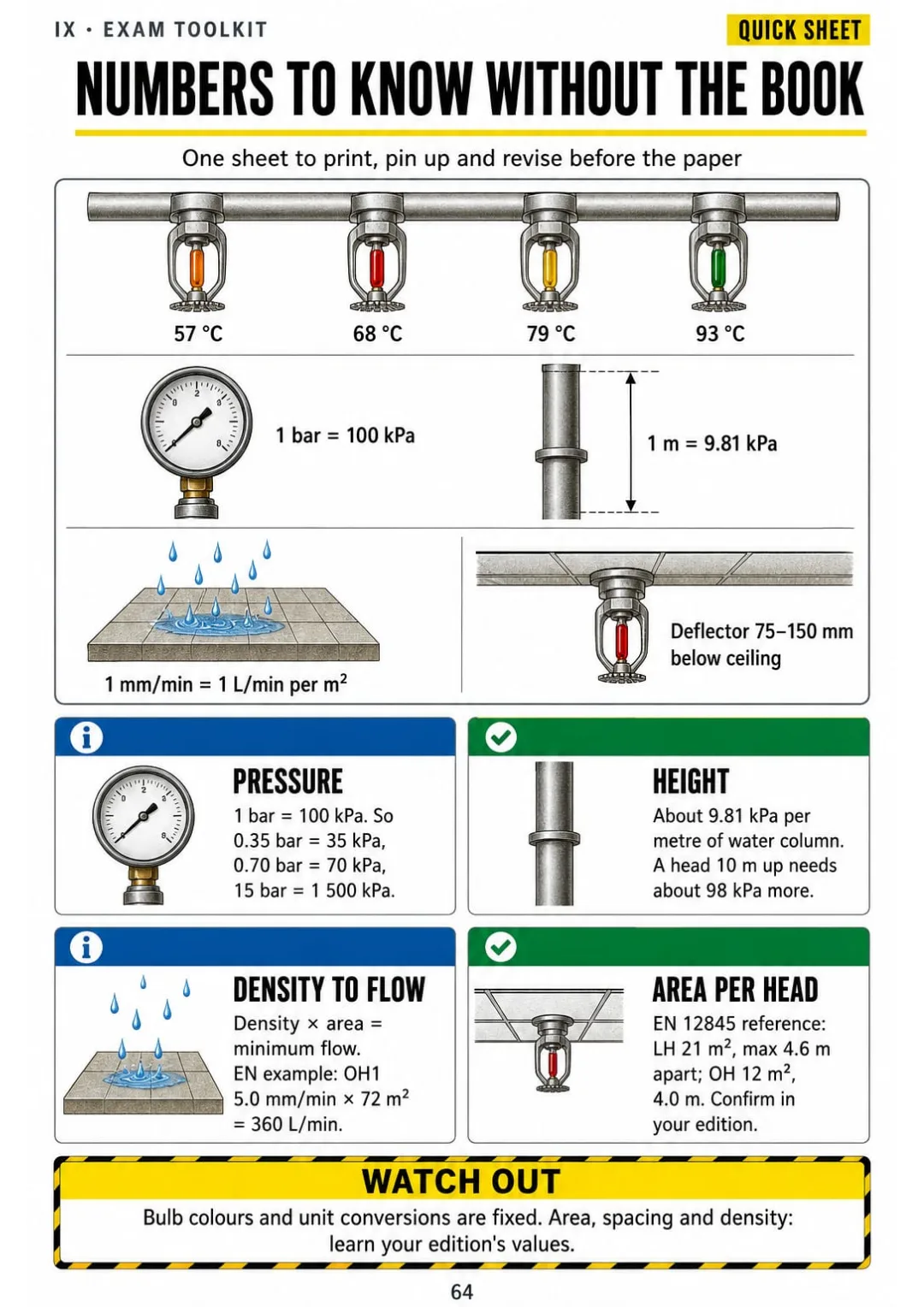
Orange 57 °C, red 68 °C, yellow 79 °C, green 93 °C · 1 bar = 100 kPa · 9.81 kPa per metre.
K80 in bar = 8.0 in kPa · 10 m of rise ≈ 98 kPa more at the valves.

Swipe to see more →

These are real pages from the book. The table of contents is the full one: 9 parts and 63 topics.

The Problem Isn't You. It's How It Was Explained to You.

You're at the exam desk with an OH2 office area in front of you, and the question asks for the minimum flow. You know the density. You know the area. You just can't remember how one turns into the other.

The manual explains it in a paragraph: millimetres per minute, square metres, and the unit conversion buried somewhere in the third sentence. You read it on Sunday and by Monday it's gone.

5.0 mm/min × 144 m² = 720 L/min, because 1 mm over 1 m² is 1 litre

In this book, that topic is one page. 1 mm of water over 1 m² of floor, drawn and labelled as 1 litre. Then the sum in a box: 5.0 mm/min × 144 m² = 720 L/min.

The wet alarm valve, the parts of a sprinkler head, bulb colours, friction loss per metre, commissioning checks: each one has its own page, drawn the same way.

You see why the numbers work, so you do the calc in the exam without paging back through the manual.

COMPARE FOR YOURSELF

The Same Topic, Two Ways to Study It

THIS
  • The manual: line after line of text
  • Sprinkler parts described only in words
  • You walk into the exam still unsure
A sprinkler head comprises a threaded body by which it is connected to the range pipe or drop, a frame supporting the heat-responsive element, and an orifice through which water is discharged once that element operates. The orifice is held closed by a cap or seal retained by either a frangible glass bulb or a fusible soldered link. Upon operation, the released water impinges upon the deflector, the configuration of which determines the distribution pattern and the designation of the head as pendent, upright or sidewall.
FOR THIS
  • The sprinkler head in one drawing
  • Every part labelled in a box
  • You see it and you understand it
The spare heads cabinet beside the valve set: every type, every rating, one spanner.
CONTENTS

Take a Look at the 9 Parts and 63 Topics

How the system works, water supplies and pumps, valve sets and alarms, sprinkler heads, hazard classes, layout and obstructions, hydraulic calculation in 5 steps, commissioning and maintenance, and an exam toolkit: 67 pages, all illustrated

IHow the System Works · pp. 5-10
  1. The Water's Journey: Supply to Head
  2. What a Sprinkler Is Designed to Do
  3. The Four Pipe Names You Must Not Mix Up
  4. System Types at a Glance
  5. Units Used in This Book
  6. How the Rule Book Is Organised
IIWater Supplies and Pumps · pp. 11-17
  1. Types of Water Supply
  2. Single, Superior and Duplicate Supplies
  3. Reading a Town Main Flow Test
  4. Tank Capacity: Flow × Time
  5. Fire Pump Sets: Electric and Diesel
  6. The Pump Curve in Three Points
  7. Fire Brigade Inlet and Supply Valves
IIIValve Sets and Alarms · pp. 18-24
  1. The Wet Alarm Valve, Cut in Half
  2. The Gauges: Above and Below the Clapper
  3. The Dry Pipe Valve
  4. Pre-action and Deluge Valves
  5. The Water Motor Alarm Gong
  6. Flow Switches and Remote Signals
  7. The Valve Set, Fully Labelled
IVSprinkler Heads · pp. 25-31
  1. Anatomy of a Sprinkler Head
  2. Bulb Colours and Temperatures
  3. The K-Factor: Q = K√P
  4. Pendent, Upright and Sidewall
  5. Conventional, Spray and Special Heads
  6. Response Time: Standard vs Quick Response
  7. The Spare Heads Cabinet
VHazard Classes and Design Basis · pp. 32-38
  1. Light, Ordinary and High Hazard
  2. Classifying a Building, Step by Step
  3. Design Density and Area of Operation
  4. From Density to L/min
  5. Supply Duration by Hazard
  6. Storage: Height Changes Everything
  7. Minimum Pressure at the Head
VILayout, Spacing and Obstructions · pp. 39-47
  1. Maximum Area per Head
  2. Maximum Spacing Between Heads
  3. Distance from Walls
  4. Deflector Below the Ceiling
  5. Beams: Distance vs Deflector Height
  6. Wide Obstructions: Heads Underneath
  7. Concealed Spaces: Roof and Floor Voids
  8. Range Pipe Layouts: End, Centre, Grid
  9. Hangers and Pipe Support
VIIHydraulic Calculation in 5 Steps · pp. 48-56
  1. The 5 Steps, Always in the Same Order
  2. Step 1: The Hydraulically Most Remote Area
  3. Step 2: The First Head
  4. Step 3: Friction Loss in kPa per Metre
  5. Fittings: Equivalent Lengths
  6. Step 4: Adding Heads Along the Range
  7. Balancing Where Two Pipes Meet
  8. Step 5: Height and the Valve Set
  9. Full Worked Example: OH2 Area
VIIICommissioning, Inspection and Maintenance · pp. 57-62
  1. Hydrostatic Test Before Handover
  2. Commissioning Checks
  3. Weekly Checks
  4. Quarterly and Half-Yearly Checks
  5. Annual and Long-Term Tasks
  6. Impairments: When the System Is Off
IXExam Toolkit and Review · pp. 63-67
  1. Open-Book Method: Where to Look First
  2. Numbers to Know Without the Book
  3. Commonly Mixed-Up Pairs
  4. Hydraulic Calc Checklist
  5. Practical Assessment: Valve Set Walk-Through

One Page, One Topic, All Clear

Think of it this way:

The inspector stops under a beam on site and asks how far below the ceiling your deflector sits, and which rule allows that distance.

You open the book at Beams: Distance vs Deflector Height. The beam, the head and the deflector are drawn side on, with the distances marked in millimetres.

OH2, 5.0 mm/min over 144 m²: minimum 720 L/min, real demand always higher.

The same goes for the wet alarm valve, bulb colours, the K-factor, friction loss and the hydrostatic test: each one on its own page.

Fire Sprinkler Systems Illustrated is 9 parts and 63 topics, all drawn, with an exam toolkit at the end: the open-book method, the numbers to know and a hydraulic calc checklist.

What you see drawn, you don't have to memorize.

What's Inside Fire Sprinkler Systems Illustrated:

Ipp. 5-10

How the System Works

The water's path from supply to head, what a sprinkler is designed to do, the four pipe names, system types, units and how the rule book is organised

IIpp. 11-17

Water Supplies and Pumps

Types of supply, single, superior and duplicate supplies, town main flow tests, tank capacity, electric and diesel pump sets, the pump curve and the fire brigade inlet

IIIpp. 18-24

Valve Sets and Alarms

The wet alarm valve cut in half, the two gauges, dry pipe, pre-action and deluge valves, the water motor gong, flow switches and the full valve set

IVpp. 25-31

Sprinkler Heads

Parts of a head, bulb colours and temperatures, the K-factor, pendent, upright and sidewall, special heads, quick response and the spare heads cabinet

Vpp. 32-38

Hazard Classes and Design Basis

Light, ordinary and high hazard, and how to classify a building so the density you pick holds up: design density, from density to L/min, supply duration, storage height and minimum pressure

VIpp. 39-47

Layout, Spacing and Obstructions

Area per head, spacing, distance from walls, deflector below the ceiling, beams, wide obstructions, concealed spaces, range pipe layouts and hangers

VIIpp. 48-56

Hydraulic Calculation in 5 Steps

The 5 steps in order, so you never start the calc in the wrong place: the most remote area, the first head, friction loss, equivalent lengths, adding heads, balancing, height, and a full OH2 example worked to the end

VIIIpp. 57-62

Commissioning, Inspection and Maintenance

Hydrostatic test, commissioning checks, weekly, quarterly, half-yearly and annual tasks, and what to do when the system is off

IXpp. 63-67

Exam Toolkit and Review

The open-book method, numbers to know without the book, commonly mixed-up pairs, the calc checklist and a valve set walk-through for the practical

At the end of the book: An exam toolkit: the open-book method, the numbers to know, commonly mixed-up pairs and a hydraulic calc checklist.
Plus: 2 Free Books

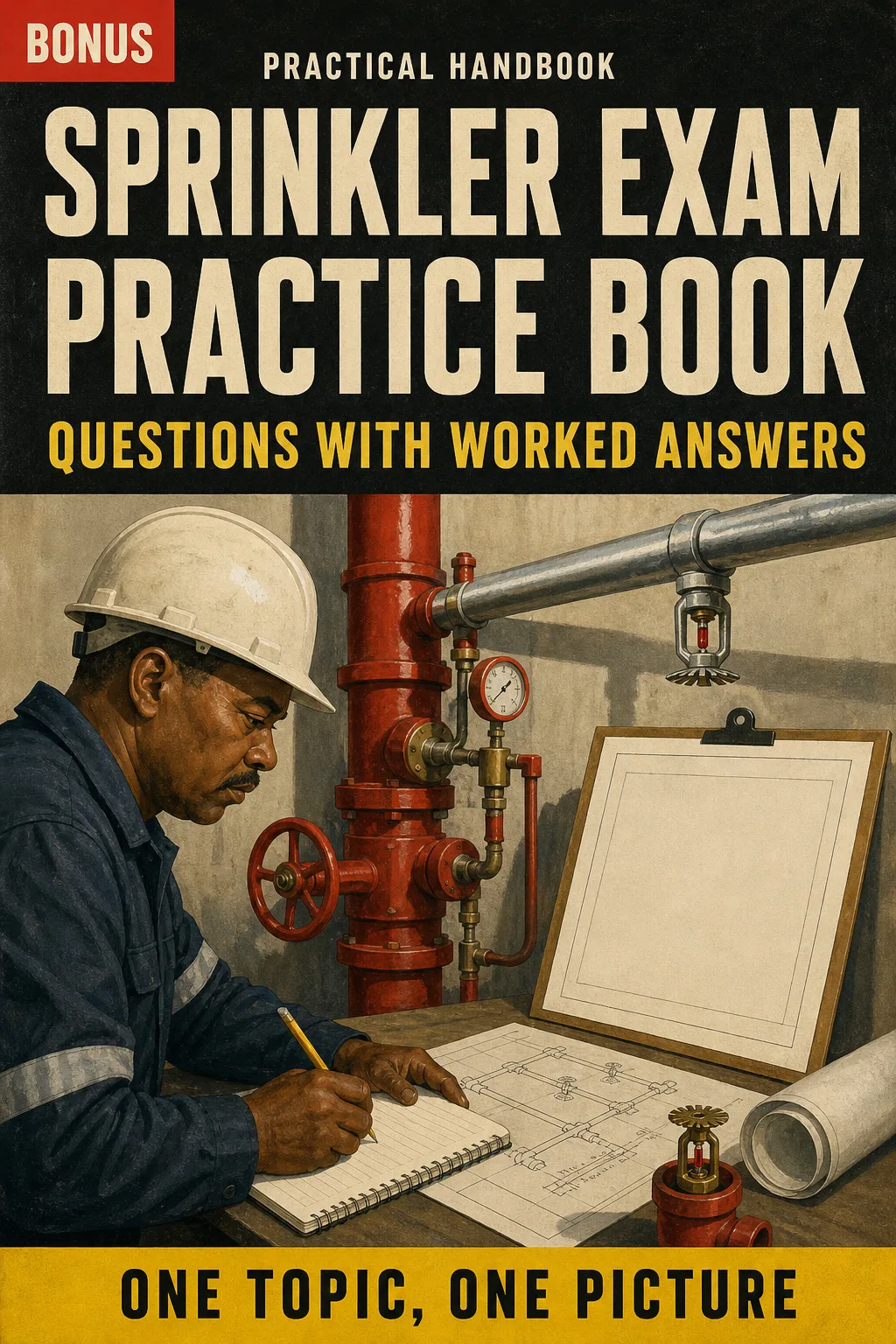
Sprinkler Exam Practice Book: Questions with Worked Answers

BONUS 1: «Sprinkler Exam Practice Book: Questions with Worked Answers»

Value on its own: US$ 17.90

Test yourself on heads, valves, hazard classes and hydraulic calcs, and see why each answer is right, not just which one.

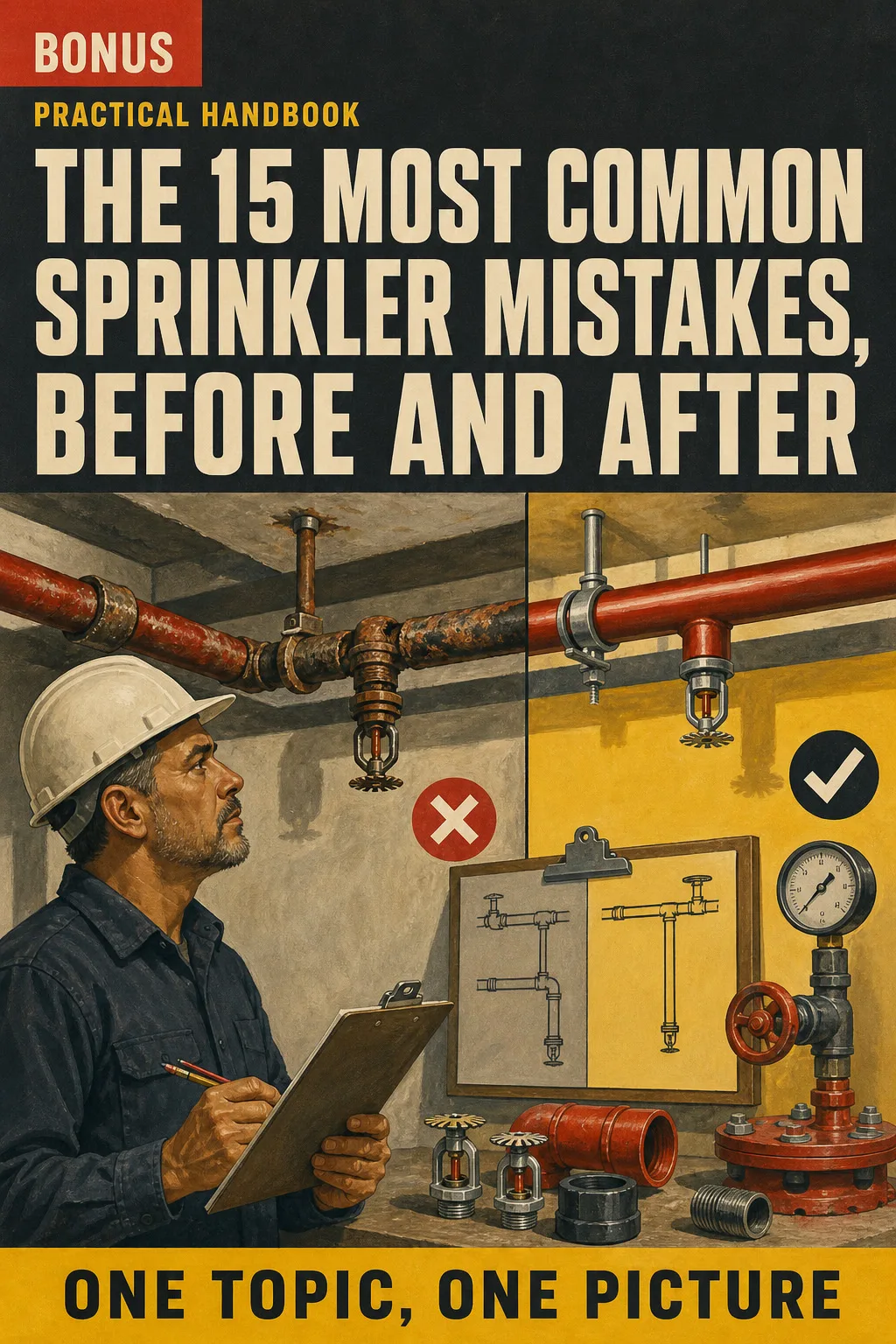
The 15 Most Common Sprinkler Mistakes, Before and After

BONUS 2: «The 15 Most Common Sprinkler Mistakes, Before and After»

Value on its own: US$ 14.90

See the mistakes found most often on site and in exam answers, each drawn wrong and then right, so you can spot them at a glance.

Fire Sprinkler Systems Illustrated with 2 Free Books

  • Fire Sprinkler Systems Illustrated: 67 illustrated pagesUS$ 63
  • BONUS 1: Sprinkler Exam Practice Book: Questions with Worked AnswersUS$ 17.90
  • BONUS 2: The 15 Most Common Sprinkler Mistakes, Before and AfterUS$ 14.90
  • High-resolution PDF to printIncluded
Total value US$ 95.80
YOUR PRICE:
US$ 27
You save US$ 68.80
YES, I WANT FIRE SPRINKLER SYSTEMS ILLUSTRATED FOR US$ 27

📄 This is a digital PDF book sent to your email: nothing is printed or shipped.

Secure purchaseEncrypted payment30-day guarantee

PDF by email: We email you Fire Sprinkler Systems Illustrated as a PDF, together with the two free books. It's a single payment: no installments, no extra charges.

Who This Book Is For

You're studying for the rules exam

You're studying for the rules exam

The whole system in the order the water travels, so every rule has a place to sit. You read a page and know where it fits.

Your assessment is coming up

Your assessment is coming up

The 5-step calc, the numbers to know without the book and the open-book method, so you know where to look first and don't lose time searching.

You already install and inspect

You already install and inspect

Spacings, clearances and test routines drawn with the dimensions, printed and kept at hand, so you can show the rule when someone asks on site.

Everything You Get Today

US$ 95.80US$ 27
YES, I WANT FIRE SPRINKLER SYSTEMS ILLUSTRATED FOR US$ 27

📄 This is a digital PDF book sent to your email: nothing is printed or shipped.

30DAYS
GUARANTEE

30-Day Guarantee

Try Fire Sprinkler Systems Illustrated for 30 days, bonus books included.

We refund everything if the file won't open, if the book isn't what you see here, if you were charged twice or if the email doesn't arrive. Just email us.

You pay once. No subscriptions.

Frequently Asked Questions

Is it for me if I've installed sprinklers for years but haven't studied in a long time?

Yes. It doesn't teach you to fit pipe; it shows the system and the rules in drawings, in the order the water travels, so you can study for the written and practical assessments.

Where does the content come from?

It is checked against SANS 10287 and the sprinkler rules used for installations and inspections in South Africa, explained in our own drawings and words. Hazard classes, densities and spacings follow those rules, not NFPA. Metric throughout: L/min, kPa, metres and millimetres. No feet, no psi.

Is this official material?

No. It's an independent study book, not a course: it doesn't come with a certificate and doesn't count towards any registration. It has no link to, or endorsement from, any standards body, inspection bureau or registration body, and it doesn't reproduce rule tables.

Does it replace the course or the training?

No. It doesn't replace accredited training, site experience or the rule book itself. In an open-book paper you work from the rule book the assessor allows; this book shows you how that rule book is organised, so you know where to look first.

Are the practice questions the exam questions?

No. They are written for this book to help you practise. They are not official questions from any exam.

When and how does it arrive?

The book and the 2 bonus books arrive as a PDF by email, to the address you enter at checkout.

Do I have to pay every month?

No. It's a single payment, with no subscription.

Can I have it on paper?

Yes. The PDF is printable, so you can print the pages you need and keep them in your bakkie or site file.

How does the refund work?

You have 30 days. We refund everything if the file won't open, if the book isn't what you see on this page, if you were charged twice or if the email doesn't arrive: just email us.

Before You Close This Page

No more rereading with nothing sticking.

Valves, clearances and calcs: you see them drawn, and that's it.

You walk into the exam knowing where everything is.

Drawings make studying faster.

The book is right below.

One-time payment: US$ 27 · Guarantee: 30 days · PDF by email

YES, I WANT FIRE SPRINKLER SYSTEMS ILLUSTRATED FOR US$ 27

📄 This is a digital PDF book sent to your email: nothing is printed or shipped.